Wednesday, March 7, 2018

Ku Klux Klan Barn

Ku Klux Klan Barn

KKK parade in Springfield, Ohio.
When I moved to New Philadelphia in 2005 I had no idea that I was just a mile away from where a historical meeting place was. The Ku Klux Klan migrated to Tuscarawas County here in the 1920's from Southern America.The population of the Klan went for eighty to ten thousand rapidly. One of the Ku Klux Klan goals were to enforce laws, the 18th amendment was very important to them. The 18th Amendment was to prohibit the sale and manufacturing of alcohol. Sadly another goal of the Ku Klux Klan was white supremacy against the African Americans. KKK did not want blacks to vote, get an education or blacks that were ins search of better jobs. Members of the Klan were dressed head to toe in whites with white pointy hats. The pointy hat covered their faces to conceal their identities.The KKK in Tuscarawas County was led by Robert Cox of Strasburg.They built a barn on Crooked Run Road New Philadelphia, Ohio. The Barn
The original barn located on Crooked Run Rd, New Philadelphia.  
had a white outside and was three stories tall. This barn was used for the meeting of ten's of thousands of people. The first floor was used from meetings and dances. The basement area was where the kitchen was located. In 1926, the Klan's population started to declined. Outside of the barn was a pool and other small building. In the 1980's the a tornado destroyed the original house on the land but the barn was only had minor damages. In 2011, the barn and house brought from the owners in 1989,went to auction. This
barn still stands today. I feel the KKK is no longer a large movement here in Tuscarawas County because first of all the leader Robert Cox went back to his job in politics. Another, reason would be that times have changed and actions like the KKK did are no reasonable with todays government. I'm glad if it is still around people are not so prejudice to others. In other words I find it important to look back and see how far we have came as a country.

Blog Post 4: A Forgotten Treasure

A Forgotten Treasure

                Have you ever been somewhere that you could sense history surrounding it? It is such a neat feeling to stand in a place that holds wonderful, rich memories. Many people have visited the PHAC baseball field in Dennison, Ohio. They may have been there for a Little League baseball game or a Jr. Miss softball game. Whatever the case, not many people know just how special this baseball field truly is.

Image result for cy young
Cy Young
PHAC stands for Pan Handle Athletic Club. This field celebrated it’s 100th birthday in 2017. The first game that took place at the PHAC was on May 16, 1917. If you visit the field today, you will see a baseball field, a concession- stand, and a couple of small bleachers. No part of the original stadium is standing today. However, it is said that when it first opened, the stadium could seat roughly 1,500 people.

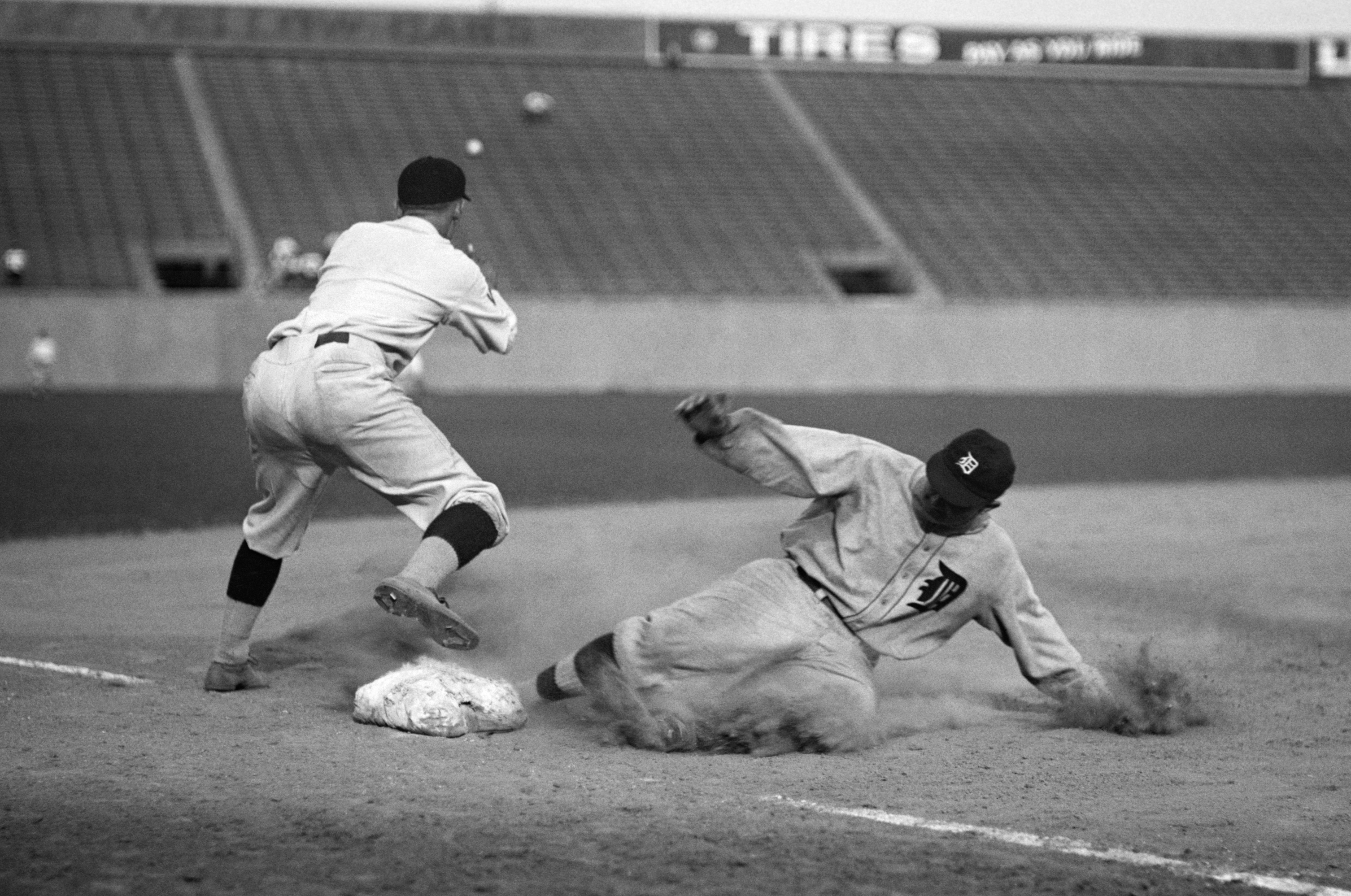
Image result for ty cobb
Ty Cobb sliding into third base
in 1924
Many have heard of the great baseball player, Cy Young. Something that not many know is that this baseball legend played at the PHAC field right here in our county. How awesome is that? Ty Cobb and Whitey Moore also played here at this field! The PHAC had formed their own team. All players worked on the railroad at the time. They hosted teams from all over; One of those teams being the Pittsburg Pirates. The Pirates beat the PHAC 3-1 and the home-plate umpire was none other than Cy Young.

The PHAC was a popular sight until a railroad labor dispute that occurred in 1922. Since then, the field has not had such attraction as it did years prior.


It saddens me that such a place once was filled with so many people and much entertainment. Many baseball legends have played at this field and yet, many local people do not even know this. I feel that it is an important part of our county’s history that should be treasured forever. I hope to one day see the PHAC baseball field bring people together and be filled with as much excitement as it once did in the early 20th century.

Blog 4


Cy Young Award


In Major League Baseball, two pitchers, one in the American League and one in the National League, receive the Cy Young award for being the best pitcher in their respective league. The prestigious award was named after Baseball Hall of Fame and Cleveland Indians Hall of Fame pitcher Denton "Cy" Young.


Cy Young was born and raised in Gilmore, a small farming community located in southern Tuscarawas county. After playing non-professional baseball for a team in Carrollton, Young accepted an offer to play for Canton's minor league team. Not long after, he joined the Majors by playing for the Cleveland Spiders (a name far more terrifying and threatening than the current Indians we know today).


Cy Young wearing a Cleveland cap in 1909


By the time Young entered the pros, he was known for his incredibly quick fastball. These lightning fast pitches earned him the nickname Cyclone, which eventually shortened to "Cy". Cy Young remained a professional baseball player for over 22 years and retired at the age of 44. At the time of his retirement in 1911, Cy Young recorded 511 career wins, pitched 749 complete career games, and pitched 7,356 career innings. These three records are still held by Young almost 107 years later.


Young came back to Tuscarawas county after retirement and lived in Newcomerstown until his death in 1955. In the following year in 1956, the Cy Young Award was posthumously dedicated to Young. Ever since then, this award has been given annually to the best pitcher or pitchers in baseball. With a very short list of famous people coming from Tuscarawas county, I am glad that one of the greatest players in baseball history was born and raised in the same county as my own.


Troop Train Accident


The Troop Train accident

Coshocton county is a small county and other than The Historic Roscoe Village it has vary little other historic events or places. One of those exceptions is the Memorial to The Troop Train Accident where a civilian passage train called the “Spirit of St. Louis” crashed into a military train injuring a total of 278 military troops were injured and 33 of those injured “Thirty-three members of two batteries of 109th Field Artillery Battalion, were killed.” ("Troop Train Accident"). The Troop Train accident occurred September 11th, 1950 near the city of West Lafayette and was caused of the negligence of an engineer by the name of Willie E. Eller. The “Spirit of St. Louis” was been driven by Mr. Eller when it rammed into the back of the military train carrying the 109th Field Artillery Battalions train injuring most of the troops located in the last 3 cars of the train and killing 33 National Guard troops. At a military inquiry regarding this incident it was revealed the Mr. Eller’s train was running late, had ignored a stop signal, and was going to fast when it slammed into the troop train. September 13th, 1950 the bodies where placed on a train in Columbus and with national guards and planes dropping flowers during the trip they arrived at Wilkes-Barre, Pennsylvania on the afternoon of September 14th, 1950. A memorial of this tragic event remains in Township road 25 in West Lafayette.

This accident was a tragedy that easily could have been prevented. We can learn from history about our mistakes. If Mr. Eller would have taken his time and obeyed the law as he was supposed to and had not have gotten into a hurry this entire incident could have been prevented. Modern Society seems to be in such a rush that we often forget that accidents and disasters such as The Troop Train accident are caused by rushed carelessness. Let’s learn from this tragic incident and stop rushing and speeding to make up time because that is what causes accidents.

Coshocton Fire Department Link containing full story and list of casualties as well as pictures: http://coshoctonfire.org/troop-train-accident/nggallery/slideshow

Citation:
“Troop Train Accident.” Coshocton Fire Department, Wilkes-Barre Record Almanac, coshoctonfire.org/troop-train-accident/nggallery/slideshow.


Blog Post 4

The Gnadenhutten Massacre


            On March 8th 1782, the Gnadenhutten Massacre occurred. A group of 165 Pennsylvania militiamen killed 90 unresisting men, women, and children. The massacre occurred because it was a retaliation for the deaths and kidnappings of Pennsylvanians; however, the Christian Indians were not a part of the previous attacks on the them. It was the Shawnee Raiders behind it. They attacked the Wallace’s Residents in Washington County in Pennsylvania, taking Mrs. Wallace and her three children. Later, the Raiders killed Mrs. Wallace and her children by impaling their bodies on the end of small tree trunks. The Savages went through Gnadenhutten and sold some of items including Mrs. Wallace’s dress. Some think that the Raiders planted that there. David Williamson was the leader of the force of the militiamen. They set out for the Moravian Villages including Gnadenhutten.
           

         The majority of the American Indians moved away from Gnadenhutten previous years. Although, some had return to plant and harvest crops. On March 7th 1782, the Indians surrendered to the militiamen; they were locked up in two of the houses. The men where in one house and the women and children where in another. The village was searched, and they did find Mrs. Wallace’s bloody dress. They took a vote if they should put the Indians to death. There were only 18 out of 165 voted for mercy. The next day, March 8th, the militiamen took the Indians into a cabin and killed them with tomahawks, mallets, and knives. They counted 90 deaths, but they took 96 scalps; only 2 boys escaped.
      
           The picture above is the burial site of the Indians. A missionary found the remaining skeletons about five years later and buried them in a big grave mass. This is located behind a museum still to this day. Some say you can hear screams of the victims. Some said they have seen ghostly figures walking around the area.   

Blog #4

Newcomerstown Schools

Newcomerstown is a small village south of New Philadelphia. The first school here started as a one room log house teaching all grades in 1856. In 1955 a tornado came through the town damaging many of the school buildings. The East and the West school got completely destroyed during the tornado so they decided to build two new buildings.

The East school had 7 rooms and the West school had 17 rooms and an auditorium. The West school had a cafeteria so the students at the East school were bussed to the West school to eat lunch.
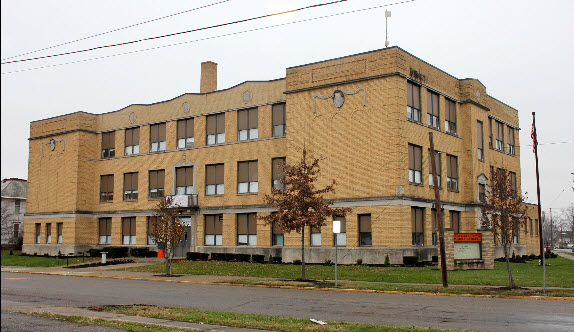
Image result for newcomerstown middle school
Newcomerstown Middle School
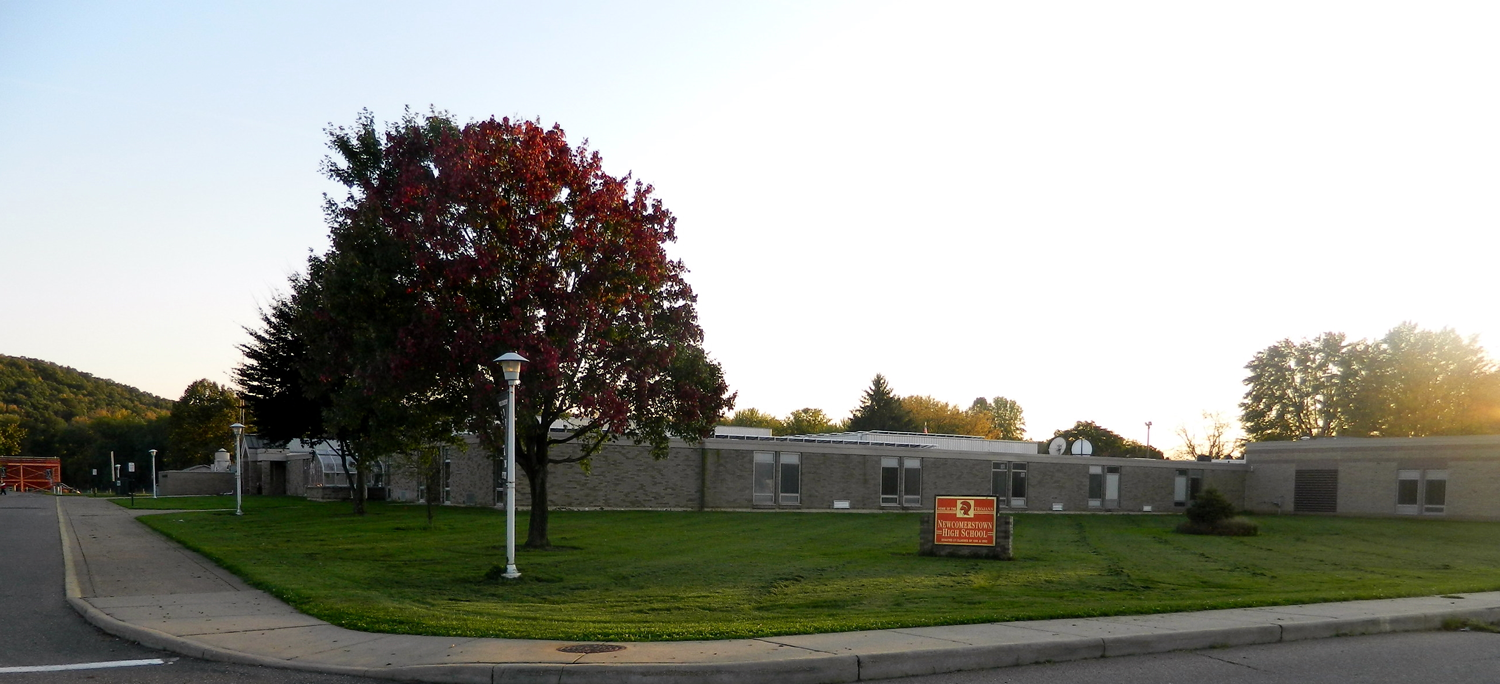
The Middle school today used to be where the high school was in 1924. It consisted of 3 floors and an auditorium. In 1965 the new High school building was built, it was one floor and had a multi-purpose room which consisted of a flat floor and bleacher seats around the outside.

Image result for newcomerstown high school
Newcomerstown Highschool

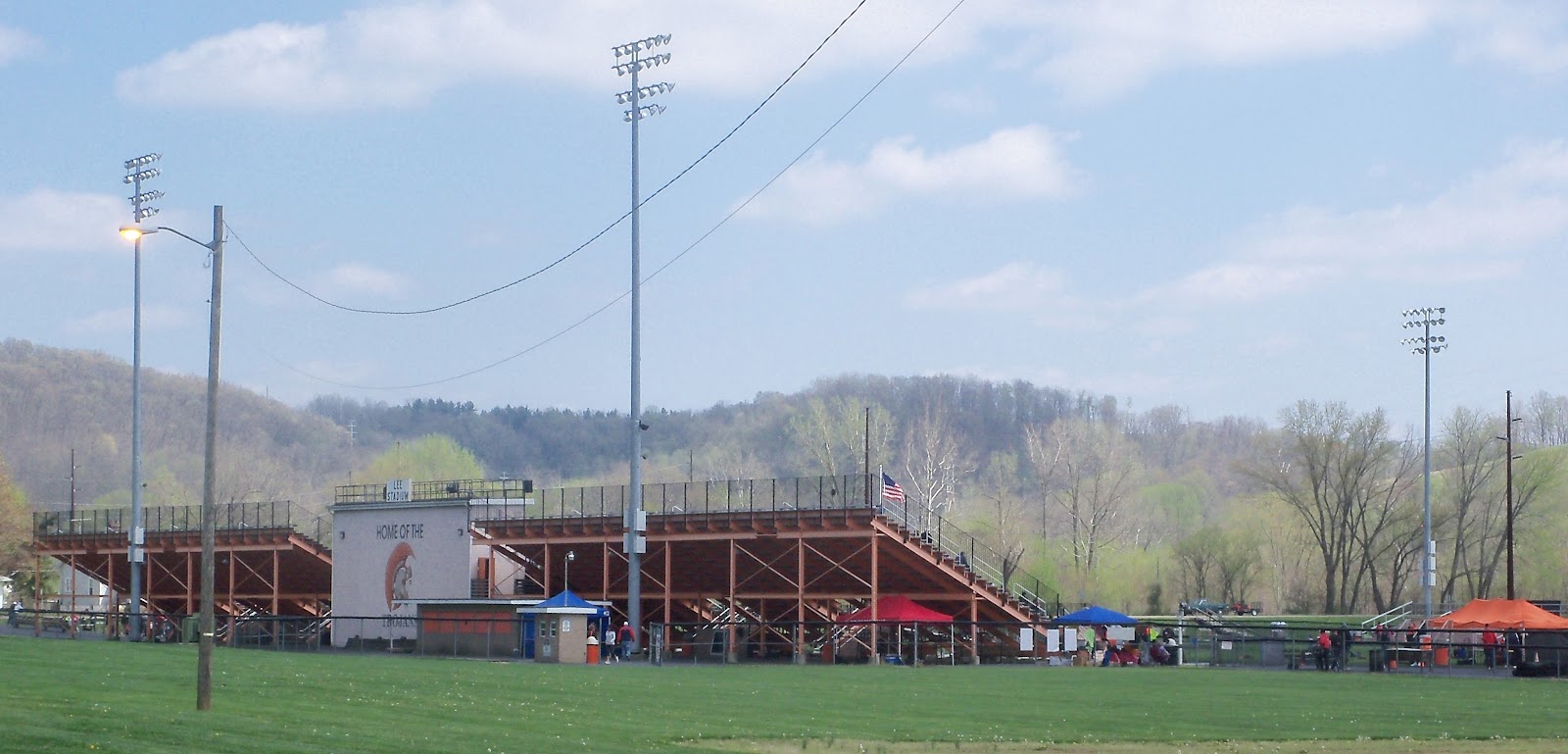
In 1967 a new athletic stadium was built beside the high school. It is called Lee Stadium.
Image result for lee stadium newcomerstown
Lee Stadium

Newcomerstown schools have come a long way from when they began. Every schools history is important not just Newcomerstown schools history.

Blog 4: Tuscarawas County Italian-American Festival

~~The Tuscarawas County Italian-American Festival~~


  The Tuscarawas County Italian-American Festival was a fantastic small scale festival (founded in 1989) taking place in Downtown Dover that celebrated the Italian culture within the local community. The festival itself consisted of a stage where musical performances took place, food vendors, games, and more. The performances of the Dominic Greco band (run by former high school band director Frederick Delphia) was one of the festival's most popular attractions. It was quite a small festival that was locally funded however, for the two decades that the festival ran it was an event that many local people enjoyed and took pride in.

  Many people in this community come from Italian descent so the whole purpose of this festival was to celebrate that culture through things like italian music, italian food (strombolis are my favorite!) and more! One of the founders of this festival, Bob Mueller of Dover, is of Italian descent himself and has expressed on numerous occasions how thankful he has felt throughout the years to have had such a good run with the festival. Though the festival came to an end in 2015 due to insufficient funds, Mueller and the rest of the community remain thankful to have been able to enjoy it while we could. 

  I feel that this festival is still important to talk about though it no longer exists because it is my hope that one day maybe it will return, or perhaps we can have a Guatemalan-American festival some day to appreciate the Guatemalan culture that is so prevalent in our community just like we did with Italian culture! I feel it is so important to appreciate our history and to know where we come from. There are so many cultures in this community (particularly German, Italian, and Guatemalan I've noticed) and it would be wonderful to give each culture the amount of appreciation we gave for the Italian culture through the Italian-American Festival.