Thursday, March 8, 2018

First and Last hanging


        There are things that have been either forgotten or lost without acknowledgement that people don’t know or forget. Back on September 9, 1825 a young man by the name of William Cartmil was traveling the route between Coshocton where he met a man from Steubenville also named William but with the last name Johnson. As they traveled they came upon a small river where Johnson had come to rest and the “Post boy” Cartmil went on a head Johnson then heard gun shots a few minutes later and ran to see what had happened to find Cartmil on the ground face first with blood coming out of his mouth. He then started walking and saw another man with a gun over his shoulder walking towards him. When he had asked him his name he had lied giving a different one to him, but his real name was John Funston.
    
   Johnson then ran to the nearest tavern called Booth’s and pleaded with the owner of the establishment to tell him about the murder of Cartmill. The owner came along with two other patrons of the tavern they come upon the post boy’s body and when they turned him over they had found several guns shot wounds to the chest. After a while Johnson was taken to the New Philadelphia jail where he was accused of the murder. The Sheriff had question he and started to believe him that he wasn’t the man that committed the murder. The Sheriff set up a trial where all the men in the county would come and Johnston would pick out the man who had committed the murder. Funston knew he had to go so, suspicion wouldn’t be on him, but Johnston points he out by a scar on his arm.
        
  Soon a trial began for the murder of the post boy, but Funston would not confess even though they had found a ten dollar note in his pocket that was the same one that had some from the post boy’s saddlebag. He tired hanging himself in his cell and failed, after that he  confessed to the murder of Cartmill and was sentenced to be hung where the subway is on west high in New Philadelphia which his death was the first and last hanging in Tuscarawas county.

The Great Trail Festival

Image result for great trail festival
The Great Trail Festival

This year will be their 37th annual Great Trail Festival. The Great Trail Festival is a special celebration of American Folk Art, with Contemporary and Country Crafting. It’s a very unique experience which invites your discovery and pleasure. When visiting the Storybook Craft Village you will find handcrafted gifts and treasured keepsakes. There are a lot of different vendors with distinctive arts & crafts and they are the heart of the Great Trail Festival. The festival is held annually at the Great Trail Festival Grounds and features exhibitors from Ohio and surrounding states.
Image result for great trail festival
Some of the costumes you may see
At the Festival you will not only find handmade and homemade crafts, you will find kettle corn (my personal favorite) and more types of food from that era. Great Trail is the Hallmark of Distinctive Exhibitors and colorful living history. In one section of the festival there are actors who are dressed in things from that era and they have weapons from then also. They have a cannon that goes off every hour and I personally think that is really cool.
Little Spirit
Little Spirit
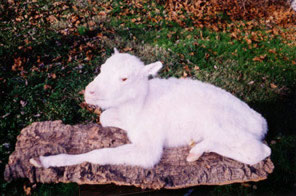
As you enter the gates to the festival you will see a herd of bison to your right. Bison were reintroduced into Carroll County in 1983. There was a group of five bison that the Great Trail Festival owners bought and the bison you see as you drive in the gates are the descendants of those five bison. At one point there was a very rare white calf born into this herd of bison. His name was Little Spirit. Little Spirit was stillborn and was found at dusk while one of the workers was walking the fence line. Little Spirit was then sent to a taxidermist. You can find Little Spirit at the front gates of the Great Trail.
I have been going to the festival since I was a little girl and I still love going there with my family and friends. You never see the same thing twice when you go there. There are a few weekends out of the year that they are open and that is August 25th-26th and September 1st through the 3rd. They are open from 10am to 5pm. For adults it cost six dollars and four dollars for anyone between the ages of 10-18, and children ten and under are free. I highly recommend going, it’s an amazing experience.


Wednesday, March 7, 2018


Tuscarawas County Fairgrounds


Tuscarawas County Fairgrounds Entrance
Tuscarawas County Fair begins on the third week of every September on Tuscarawas county fairgrounds. The seven-days run that feature livestock competitions, fair food, entertainment and 4-H displays. The country fair referred to as “the best seven days in September”.  The tradition has been past on for 167 years and passed down from one generation to the next within the society. This traditional culture originated on the county fairgrounds
Tuscarawas county fairgrounds is locating at 259 Tuscarawas Ave, Dover, Ohio. It has a forty-acre plot and the annual agricultural exhibition of the county is always hold here. Tuscarawas county fairgrounds is need for the Tuscarawas Agricultural Society. In the past one hundred and fifty years, many events hold here, it attracts hundreds of thousands of people.

The Tuscarawas Agricultural Society was organized at Dover on Nov. 10, 1894. The society’s constitution and by-laws were adopted at the time and officers were elected. The constitution stipulated that annual exhibitions of the society be held alternately in Dover and New Philadelphia. The first fair was held Oct. 15 and 16, 1850, at Dover in an area known as Hayden’s Grove. The second fair was held Oct.16 and 17, 1851, at New Philadelphia. it was estimated 5,000 people attended over the fair’s two days.
After two fairs, the need of a fairground become urgent, and it was proposed to purchase permanent grounds between New Philadelphia and Dover. This idea was rejected. A new proposal was made the New Philadelphia and Dover each purchase ground on which to hold the fair alternately, erect buildings and keep them repair. This propose was rejected by New Philadelphia, and permanent grounds were located near Dover on the site of the present fairgrounds. Eight acres were purchased by the society from the heirs of Christian Deardorff. (Deardorff owned Dover’s land since 1807) The grounds increased in size from time to time until in 1884 it included over twenty-fours. Of these, ten acres were at first leased at $12 per acre annually, and the land afterward purchased from the village of Dover and its use donated to the society. A floral hall and other necessary buildings were constructed early in the history of the society and added to and improved at various time since.
Tuscarawas county fair have been held in this ground annually since, except for 1861, when the grounds were occupied as a recruiting camp for volunteers during the Civil War. The fairgrounds were known as Camp Meigs during that period. Two regiments raised in this area — the 51st Ohio Volunteer Infantry and the 80th Ohio Volunteer Infantry — were organized there. The camp was named for Ohio Gov. Return Jonathan Meigs Jr.
The county fairgrounds have experienced wind and rain for over one and half century. This place witnessed the livers of several generations. This place connects the people whom live in this land. The county fairgrounds help passing down the tradiations and culture while adapting to a new one. Keeping traditions alive is important for teaching the next generation about the past and share the past.
Source: "The History of Tuscarawas County"

Blog #4: Hicks Roofing Inc.

This is the story of men in my life that have not only worked to have a great life for their families, but for their employees and community as well.  

A story about humbled men.

And a story about a company that has changed lives.

Two years after World War II Henry Franklin Hicks, a coal miner and union roofer, was told by Jay Raider from Raider Construction and Leo Gundi from Gundi Construction that he had too much talent and personality to be working for other people.  With those little nudges he started Hicks Industrial Roofing in a little block building on 7th Street NE right here in New Philadelphia.  He had two orange crates and a flat door as a desk, and he would scratch quotes onto a 2x4 for his customers when he would look at a job.

Times were good for him then after the war.

It was the booming time for industry's.

My dad fondly remembers the things my great grandpa did when he ran the business and shared, "I remember grandpa had a group a guys that he would pick up from the jail.  He would pick em' up in the mornings and drop em' back off in the evenings... He had a guy that worked for him by the name of Woody.  From everything I have heard he was the toughest ole bird that there ever was.  One day Woody was bent over shooing a horse, and his son, who fought bitterly with him all the time, came up behind him and whacked him the back of the thighs with a 2x4.  He took off after that kid running across the yard, and he stepped in a ground hog hole.  His leg went in the hole, and his body kept going while folding over his knee... He went to work the next day.  Everyone always said his knee was the size of a bowling ball.  That guy still came to work though, and those were the kind of guys you had as roofers back then."

The business continued to grow.  Dennis Hicks (Franks son, my dad's father, and my grandpa) had worked for him when he was young.  He went off to college though, and he went to Malone University.  He was there when his dad had a serious heart problem occur, so he quit college to come home and run the business.  He ran it with his brother for a while, however they didn't get along.  Dennis bought out his brother and owned the business in 1972.

The business went through some good times and some bad times.  My dad said, "I can remember years dad would sell darn near everything just so he could make payroll."  It had been a union company for a long time, but it was in 1981 when they dropped out of the union.  "Dad always said that it was one thing for a guy to say he made $18 an hour while he was sitting at the bar stool, but he only worked two hours," said my dad.  At first it was low wages, no benefits, and we would have union workers show up at our job sites with guns. It took time, but the company boomed.

It was a tough time.

Not shortly after that my dad started working at Hicks Roofing with a few of his buddies while they were in high school.  Dennis would give them different odd jobs or small roofing jobs to do from 1982 through 1984.  He then went to college out in Colorado for a short while.  He didn't like it, so he came back and went to Kent for a bit.  He took what savings he had, got a truck and some roofing supplies, and he started his own roofing company.

He married my mom, dropped out of school, and things were going great.

Until the one year he ran out of work.

It was August of 1988.  He usually didn't start saving money to get through the winter until then as well.  My dad recalled, "I remember the day I walked into dads office.  I asked him if he had a minute to talk, and he said he did.  I closed the door, sat down on the floor, and started to ball.  I told him I was a failure.  I had a baby on the way, no money, and I needed a job.  I told him I would sweep floors- anything.  There wasn't anything I couldn't do.  I told I would love to be in sales though... He asked me how much I needed a week, and I told him.  He laughed at me... He asked who cut my hair- I told him.  He said 'Beth can do that.  That's $10 a month you don't need.' He asked me how many dogs I had.  I had fifteen at the time, because I had a show dog kennel.  He asked how much the food cost, I told him, and he said 'Sell em' all.'  He went down a long list of things until he came up with the fact that  $365 a week was all I was going to get until I graduated college. So I started working full time for Hicks Roofing in the fall of 1988, went to college for another year and half, took a number of business classes, and I went back into my dads office.  I told him Pudd'nhead Wilson and Those Extraordinary Twins were driving crazy.  I wanted to quit school. I told him that if it meant I had to work somewhere else then I would, but I was quitting.  I couldn't do it anymore.  My dads general manager had quit, and so he let me take over as general manager."

In 1994 Dennis wanted to sell the business, because he didn't want to have to do all the paperwork as the business was growing bigger and bigger.  My dad begged him not to sell, he said he could run it, and all he needed was the opportunity from my grandpa to do it.

My grandpa then let my dad take over the business.  My dad made big changes there.  Hicks Roofing was the first company in Ohio to go drug free without going out of business trying to do it.  He started health insurance for all the employees.  My dad truly wanted a better quality of a person working there, and it has been an incredible thing since.

In 1996 Hicks Roofing got the biggest job they had ever had- The New Towne Mall.  Two months into it the consultant told my dad that at the rate they were going it was going to take two and a half years to get it done, and it was going cost us $250,000 dollars in damages.  My dad said, " I looked out onto the roof when he told me that, and I knew I had taken it upon myself to bankrupt what my grandfather and my dad had built. That fear was a marvelous motivator... It was a year later we finished the job successfully, and it was the best year to date that we had as a company."  The company had grown more and more, and my dad went to my grandpa to buy the company in 1998.  My dad truly appreciated that he trusted him enough to buy it and run it on his own.

Ever since then Hicks Roofing has grown in incredible ways.  We have high standards, do what we do well, and expect our roofs to last at least forty years.  We do quality work in an age where quality isn't always the top thing on peoples list, and we are proud of it.  We go anywhere we are needed in any state, and we do jobs for some of the biggest commercial companies today such as Walmart Distribution Centers, Smuckers, Marzetti, schools and colleges all over Ohio, and so on.

To think that it all started with those two orange crates and a door for a desk around seventy years ago.

My dad is the third generation, the fourth (my oldest brother) is planning on taking over after my dad, and my nephew (my brothers son), being only nine years old, is already saying he too wants to be a "Hicks Roofer."

This is more than a roofing company.  It's a place representing hard work, sweat, tough love, tears, and history that my family and I adore.

Interview with my dad, Mike Hicks.


Blog Post 4

Sacred Heart Church
When people think of classifying a city or a big town, they think of the famous landmarks that lie there, the history that has happened there and the people that live there. They think of everything significant that has happened in that city, but they don’t necessarily think of the small things that make the community a whole. When we think of New Philadelphia, we think of the Schoenbrunn Village, the Quaker Cinema, The Daily Grind and so many other places that associate with New Philadelphia. However, we don’t think of the small businesses or churches that make up the rest of the town. One small part of New Philadelphia that can be tied together is Sacred Heart Church.

 Back in 1891, Fr. Anastasius Muller came from St. Joseph Church in Dover to New Philadelphia to teach the young children. He held classes on a rented property between Public Square and High Ave. The next year he would move to a room above Urfers Store on East High. By 1893, there were at least twenty-seven Catholic families that wanted to have a small community church local in New Philadelphia. Advances would be made to buy a small lot for 900 dollars on the corner of Fair and Third Street.  Later in 1894, the German Reformed Church would be purchased for 3,000 dollars and was remodeled to be used as a Catholic Church on June 9, 1895; this church would later be labeled as Sacred Heart Church.

Calvary Cemetery
On September 16, 1907, they would purchase the three and a half acres of land adjacent to the building to be used as the Calvary Cemetery (creepy, I know); four more acres were added in 1927. Then in 1910, a school room would open to allow nuns to come from Dover to teach those the Catholic religion. To accommodate the sisters, Sacred Heart would purchase additional land to build a convent and would round out all of Third Street to Third Drive. In 1925, the Bishop would correspond with the Capuchin Provincial to create a new church for the community and move it to the center of the lot with no basement. In 1927, the final approval for construction was signed, and by August 28, they began to build. The development would end on July 25, 1928, with a total of 96,108 dollars.

Inside Sacred Heart
There were many other small additions to this momentous journey of Sacred Heart Church. The would expand the school to accommodate more students, build a music room so the choir could practice, and build a parish hall for meetings and parties. Between 2016 and 2017, Sacred Heart would tear down the Parish Hall/ Schoolhouse and begin to construct a new parish hall that would be more accommodating to the elderly of the church. Inside the church: there would be stained glass
windows, a mosaic of Jesus at the front of the church, pillars that have the four main gospels carved into them, a giant pipe organ on the balcony of the church and wooden pews lined up in rows for people to hear the gospel. Not only has the outside of Sacred Heart been renovated, but the inside has as well.

Sacred Heart Church is one of those churches that not everyone knows about, yet it is part of the New Philadelphia community. They spent millions of dollars to give back to the community and to allow more people join the church. They gave us a school for families who wanted their children to know more about God. They gave them a music room for the choir and band to enjoy. Sacred Heart is one of a small part that makes New Philadelphia a community, and that is something worth sharing.

Ku Klux Klan Barn

Ku Klux Klan Barn

KKK parade in Springfield, Ohio.
When I moved to New Philadelphia in 2005 I had no idea that I was just a mile away from where a historical meeting place was. The Ku Klux Klan migrated to Tuscarawas County here in the 1920's from Southern America.The population of the Klan went for eighty to ten thousand rapidly. One of the Ku Klux Klan goals were to enforce laws, the 18th amendment was very important to them. The 18th Amendment was to prohibit the sale and manufacturing of alcohol. Sadly another goal of the Ku Klux Klan was white supremacy against the African Americans. KKK did not want blacks to vote, get an education or blacks that were ins search of better jobs. Members of the Klan were dressed head to toe in whites with white pointy hats. The pointy hat covered their faces to conceal their identities.The KKK in Tuscarawas County was led by Robert Cox of Strasburg.They built a barn on Crooked Run Road New Philadelphia, Ohio. The Barn
The original barn located on Crooked Run Rd, New Philadelphia.  
had a white outside and was three stories tall. This barn was used for the meeting of ten's of thousands of people. The first floor was used from meetings and dances. The basement area was where the kitchen was located. In 1926, the Klan's population started to declined. Outside of the barn was a pool and other small building. In the 1980's the a tornado destroyed the original house on the land but the barn was only had minor damages. In 2011, the barn and house brought from the owners in 1989,went to auction. This
barn still stands today. I feel the KKK is no longer a large movement here in Tuscarawas County because first of all the leader Robert Cox went back to his job in politics. Another, reason would be that times have changed and actions like the KKK did are no reasonable with todays government. I'm glad if it is still around people are not so prejudice to others. In other words I find it important to look back and see how far we have came as a country.

Blog Post 4: A Forgotten Treasure

A Forgotten Treasure

                Have you ever been somewhere that you could sense history surrounding it? It is such a neat feeling to stand in a place that holds wonderful, rich memories. Many people have visited the PHAC baseball field in Dennison, Ohio. They may have been there for a Little League baseball game or a Jr. Miss softball game. Whatever the case, not many people know just how special this baseball field truly is.

Image result for cy young
Cy Young
PHAC stands for Pan Handle Athletic Club. This field celebrated it’s 100th birthday in 2017. The first game that took place at the PHAC was on May 16, 1917. If you visit the field today, you will see a baseball field, a concession- stand, and a couple of small bleachers. No part of the original stadium is standing today. However, it is said that when it first opened, the stadium could seat roughly 1,500 people.

Image result for ty cobb
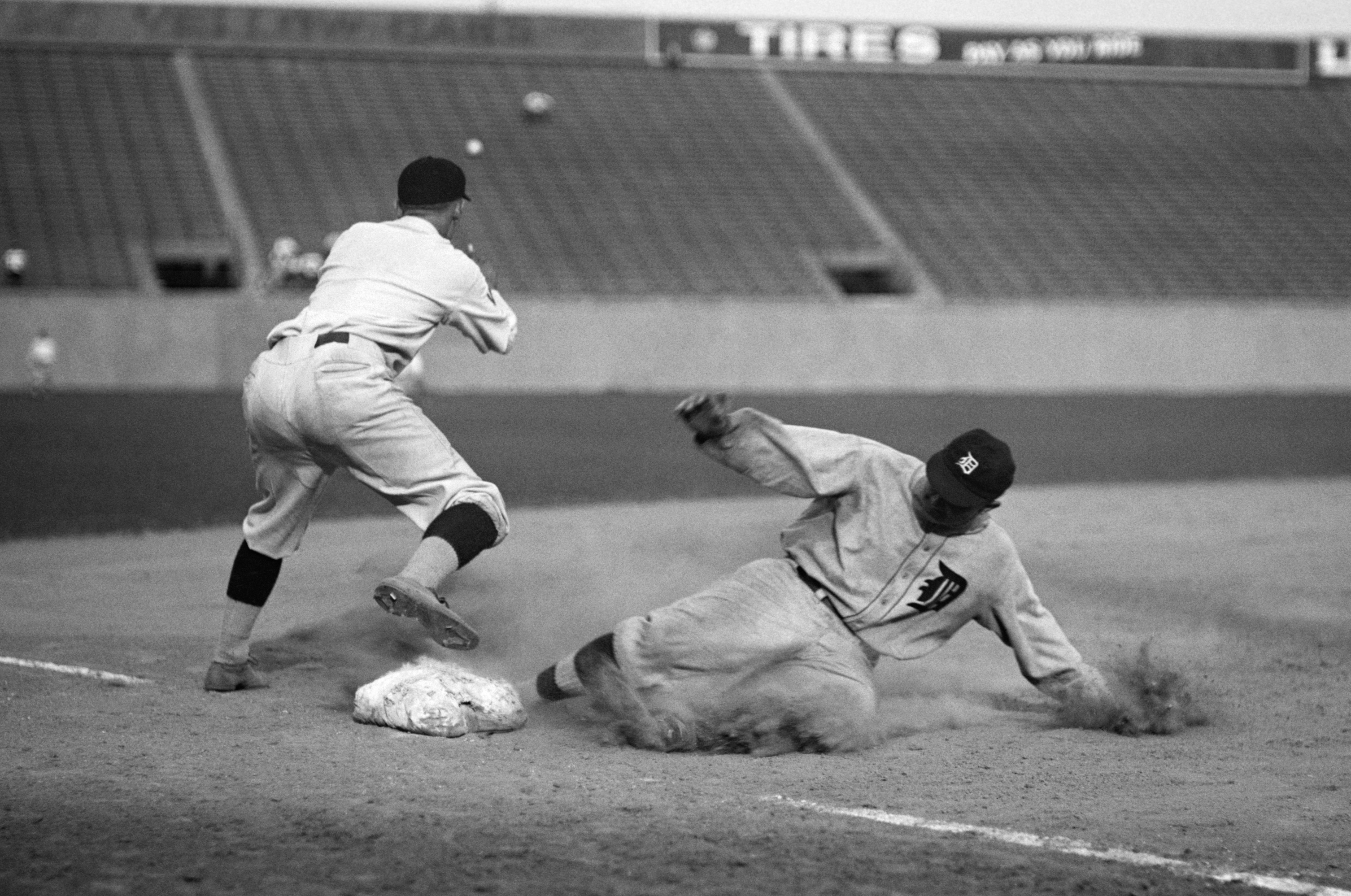
Ty Cobb sliding into third base
in 1924
Many have heard of the great baseball player, Cy Young. Something that not many know is that this baseball legend played at the PHAC field right here in our county. How awesome is that? Ty Cobb and Whitey Moore also played here at this field! The PHAC had formed their own team. All players worked on the railroad at the time. They hosted teams from all over; One of those teams being the Pittsburg Pirates. The Pirates beat the PHAC 3-1 and the home-plate umpire was none other than Cy Young.

The PHAC was a popular sight until a railroad labor dispute that occurred in 1922. Since then, the field has not had such attraction as it did years prior.


It saddens me that such a place once was filled with so many people and much entertainment. Many baseball legends have played at this field and yet, many local people do not even know this. I feel that it is an important part of our county’s history that should be treasured forever. I hope to one day see the PHAC baseball field bring people together and be filled with as much excitement as it once did in the early 20th century.